
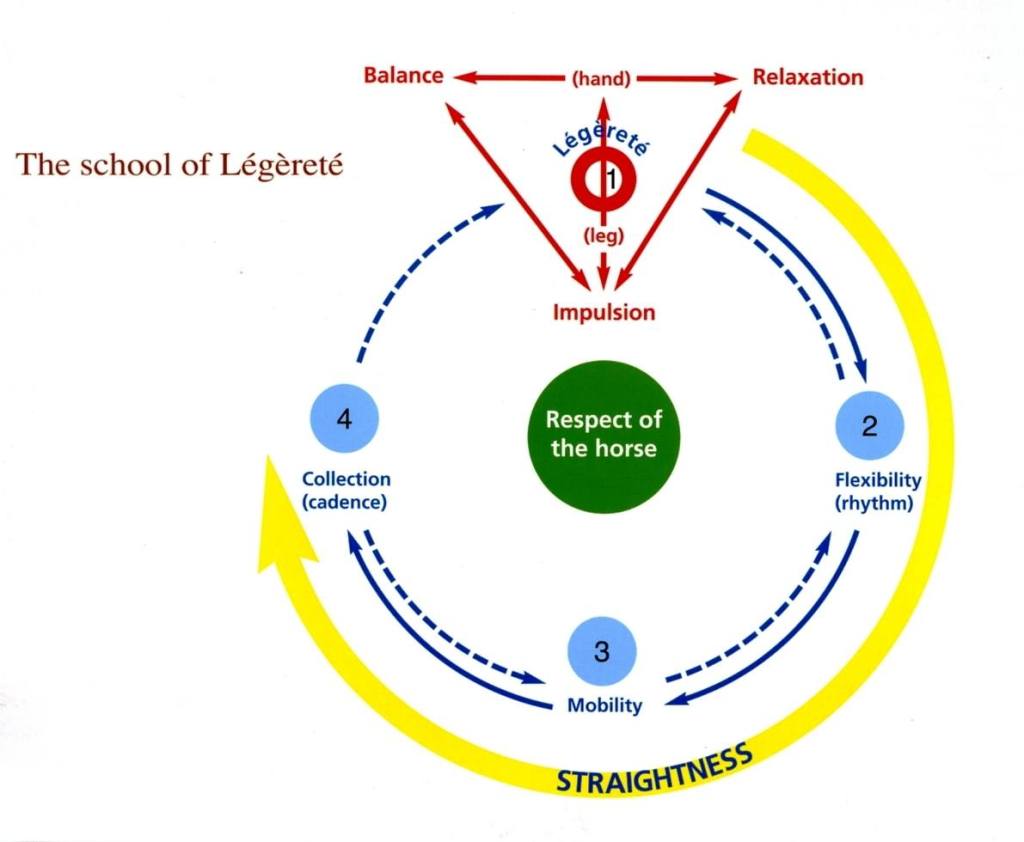
It’s a fail safe recipe. These three qualities are the foundation of all we do with horses. Without these basics, achieving other qualities is difficult and collection impossible.
Relaxation and impulsion are an interesting combination. Too much activity, and the horse is not relaxed, it can run through or ignore our aids. Too much relaxation, the horse lacks reactivity. We need a balance between the two. That in itself is interesting, as when there is equilibrium of relaxation and impulsion, we can improve balance. And, we can never have too much balance!
Relaxation is the priority for all we do with horses. It’s evidence that a horse is ready to learn. Nothing productive happens without it. If a horse is not relaxed… we must find a way to help it relax, but we also need to know the differences between fear, tiredness, pain and resistance. Reading the signs, being attentive to the slightest body language is the first key to minimising tension and creating relaxation.
I can’t ignore any tension in the moment it happens. My safety relies on my ability to notice small signs of tension. With empathy, I can establish trust so each moment becomes an opportunity to learn, to feel safe, brave, and free. This way, we help a horse feel understood, rather than over-faced.
It would be the same for us. I don’t want to be ignored or pressured to do something I’m not comfortable with. Like a horse – I need reassurance, understanding and confidence. Impatience or force will only make it worse.
Horses are forgiving, but they also have photographic memories, so they are great teachers. They teach us to plan ahead, and then to forget it and be flexible. They teach us to be relaxed, balanced and composed. They teach us to be aware of our body language, more clear, mindful, precise and timely and hopefully as kind and forgiving of their mistakes as they are of ours.
 Classical Riding & Dressage - Susie Walker
Leave a comment